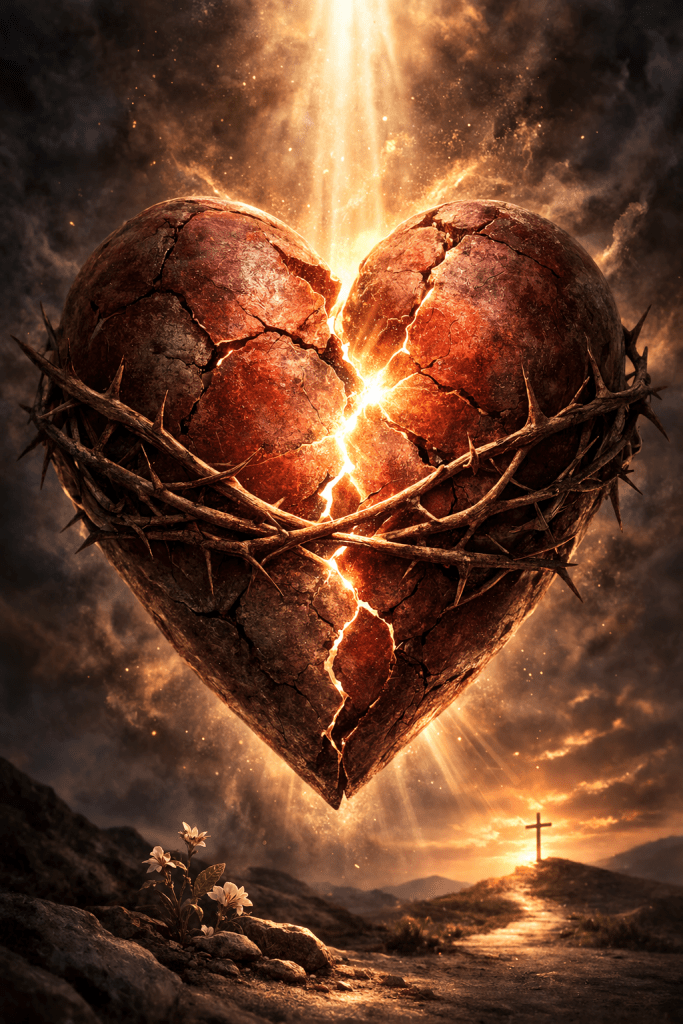
All of us are wounded in some way as we grow up. None of us passes through life untouched. Some wounds come from being bullied, yelled at, neglected, or simply feeling unloved. Others come from betrayal, rejection, or disappointment by people we trusted. Life has a way of marking us. Sometimes the wounds are obvious and visible. Other times they are quiet and hidden deep within the heart.
Many of our deepest wounds come from broken relationships. Divorce can tear families apart and leave lasting scars on both parents and children. Friendships that once meant everything can suddenly collapse. Family members who once shared love and trust can become distant or estranged. When relationships break, something inside us often breaks as well.
Some wounds also come from our own sins and the mistakes we have made along the way. There are choices we regret, words we wish we had never spoken, and actions we wish we could undo. When we look back honestly, we often see moments where we hurt others or ourselves. Those memories can linger and become wounds of their own.
Whatever the source, these wounds shape how we react to the world around us and can make it difficult to trust others. When trust is broken, it can lead to fear, anger, or behavior that harms both us and the people around us. In this way, wounded people often wound others.
These wounds can also affect how we relate to God. When trust has been broken repeatedly in human relationships, it can become difficult to trust even the One who has never betrayed us.
When trust is broken, fear often takes its place. That fear can express itself in many ways. Some people withdraw and isolate themselves. Others become defensive or suspicious. Some become angry, believing that if they strike first they will not be hurt again. Others attempt to control their surroundings, hoping control will protect them from future pain.
These reactions are understandable, but they rarely bring healing. Instead, they often deepen the wound.
Some people respond to wounds by becoming deeply afraid of being abandoned. They cling tightly to relationships because they fear losing them. Even small signs of distance can cause anxiety. In their desire to avoid being hurt again, they may hold on too tightly, which can place strain on the very relationships they hope to preserve. (Psychology often calls this anxious attachment.)
Others react in the opposite way. After being hurt, they decide it is safer not to depend on anyone. They become self-reliant and emotionally guarded. They may appear strong and independent, but underneath that strength is often a fear of being vulnerable again. By keeping others at a distance, they believe they can protect themselves from future pain. (Psychology often calls this avoidant attachment.)
Still others feel torn between the desire for closeness and the fear of being hurt. They long for connection, yet when relationships grow deeper, fear causes them to pull away. This can create a cycle of drawing people close and then pushing them away again, leaving both sides confused and wounded. (Psychology often calls this disorganized attachment.)
In this way, wounded people sometimes wound others. The pain we carry can spill over into our relationships. Words spoken in anger, actions taken in fear, or decisions made from bitterness can pass the wound from one person to another. What began as pain inside one heart can quietly spread into families, friendships, and communities.
This is one of the tragic patterns of human life. Hurt people often hurt people. The wounded heart, if it is never healed, can become a source of more wounds.
Unhealed wounds also make it difficult to form healthy relationships going forward. When the heart is still guarded by past pain, it struggles to trust again. People may push others away, or they may cling too tightly out of fear of losing them. Some may unknowingly repeat the same unhealthy patterns they experienced before.
Because of this, wounds often influence the choices we make. A person who fears abandonment may stay in relationships that are harmful. Someone who has been betrayed may struggle to trust even those who mean well. Others may make impulsive decisions simply to escape the pain they feel inside.
In many cases, the wounds we carry are the reason we continue making the same bad choices. We may believe we are choosing freely, but often we are reacting to pain we have never fully faced. Until the wound is healed, it continues to shape our decisions.
For some people, those wounds eventually heal. Time, reflection, and grace can slowly restore what has been damaged. They learn to forgive. They learn to trust again. They learn that pain does not have to define their future.
For others, however, the wounds remain for years or even for a lifetime. The past continues to influence the present. Old injuries continue to shape new decisions. Sometimes people do not even realize how much their past has shaped their current behavior.
Many carry their wounds quietly. On the outside they appear strong and composed, but inside they struggle with memories, fears, or shame. Some people feel embarrassed by their wounds and prefer not to speak about them. Others feel ashamed and try to hide them completely.
Still others become so familiar with their pain that they cannot imagine life without it. The wound becomes part of their identity. It shapes how they see themselves and how they believe others see them.
Healing can feel unfamiliar, even frightening. Letting go of the wound may feel like stepping into the unknown. For some people, it feels safer to cling to what they know—even if what they know is pain—rather than risk facing the uncertainty of change.
Instead of healing, many people try to numb the pain. They look for distractions that allow them to escape their thoughts for a while. Some immerse themselves in work, entertainment, or constant activity. Others turn to habits that dull the mind or quiet the heart temporarily.
These things may provide relief for a moment, but they rarely bring lasting healing. In fact, they often deepen the wounds. The pain is pushed down rather than resolved, and over time it continues to shape the person in hidden ways.
Some of the deepest wounds we carry are the ones we create ourselves through our own sins. When we choose actions that harm others or ourselves, those choices often leave scars. Regret, guilt, and shame can become chains that bind the soul.
Over time those chains can begin to feel permanent. People may believe they cannot change or that their past has already determined their future. They may feel trapped by habits, patterns, or decisions they cannot seem to escape.
But this is precisely why Jesus came.
He came for the wounded. He came for those burdened by sin, regret, and brokenness. He came to heal the brokenhearted and to set captives free. He came to destroy the works of the devil and to restore what has been damaged within us.
The message of Christ is not merely about rules or religious duties. At its heart, it is about restoration. It is about healing what has been wounded, forgiving what has been broken, and renewing what has been lost.
Jesus did not come only for those who appear righteous on the outside. He came for those who recognize their need for healing. Throughout His life, He repeatedly sought out the broken, the rejected, and the forgotten. He touched the untouchable, forgave the guilty, and restored dignity to those whom society had cast aside.
His invitation remains the same today.
Healing begins when we stop hiding.
It begins when we acknowledge our wounds rather than pretending they are not there. It begins when we admit that we are not as strong or as self-sufficient as we once believed. It begins when we allow truth to shine light on the places we have tried to keep hidden.
Truth has a powerful effect on the soul. When truth exposes what we have buried, it can be uncomfortable at first. But exposure is the beginning of healing. What remains hidden cannot be healed. What is brought into the light can begin to change.
Confession is one of the ways this healing begins. Confession is not simply admitting wrongdoing; it is an act of humility. It is a willingness to face the truth about ourselves and bring it before God.
When we do this, something remarkable begins to happen. The chains that once seemed permanent begin to loosen. Shame begins to lose its power. The wounds that once defined us begin to heal.
Healing does not always happen instantly. Sometimes it is a gradual process that unfolds over time. But every step toward truth and humility moves us closer to freedom.
In the end, the choice before us is simple, though not always easy.
We can humble ourselves and allow God to heal what is broken within us. We can bring our wounds into the light and trust Him to restore what has been damaged.
Or we can allow pride to keep us from admitting that we are wounded. Pride tells us that we must appear strong, that we must hide our weaknesses, and that we must carry our burdens alone. But pride ultimately keeps the wound hidden, and hidden wounds cannot heal.
Each of us must decide which path we will follow. We can choose humility, truth, and healing. Or we can cling to pride, fear, and captivity.
One path leads toward freedom, restoration, and peace. The other leaves us trapped by the wounds we refuse to face.
The choice is before us.
And the direction we choose will shape the people we become.
 Gods By Grace
Leave a comment