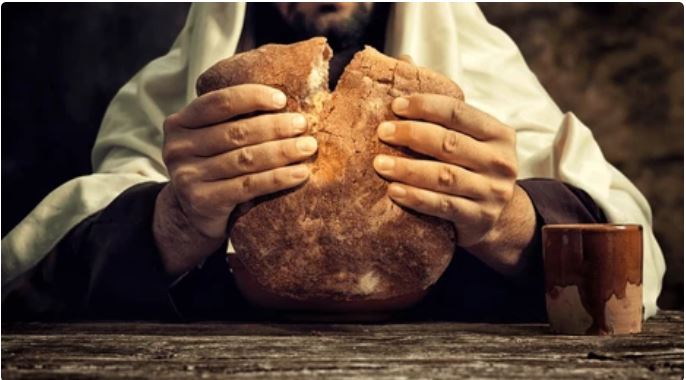
Growing up in a traditional Baptist church, we celebrated the “Lord’s Supper” about once every three months or so. It was pretty much the same in all the Baptist, Charismatic, and non-denominational churches I had attended. I never really asked why or understood why it was done so infrequently. But I have always felt that it should be something done more often — perhaps at least once a week. I knew very little about other denominations, but recently I started attending an Orthodox church, where they have the Eucharist every Sunday and Wednesday. I really appreciate this practice. The Eucharist is, or at least seems to be, the centerpiece of the Divine Liturgy.
One thing I knew was that Catholics believe the bread and wine actually transmute into the body and blood of Christ, and Orthodox belief is similar to that, whereas most Protestants — in particular Baptists — consider it symbolic. So let me ask this: if it is symbolic and we believe it to be literal, what are we missing out on? Absolutely nothing. But if it is literal and you believe it to be symbolic, what are you missing out on? Well… Everything!
Why do I say everything? Jesus said I am the Bread of life. John 6:32-35 Jesus said to them, “Very truly I tell you, it is not Moses who has given you the bread from heaven, but it is my Father who gives you the true bread from heaven. 33 For the bread of God is the bread that comes down from heaven and gives life to the world.” 34 “Sir,” they said, “always give us this bread.” 35 Then Jesus declared, “I am the bread of life. Whoever comes to me will never go hungry, and whoever believes in me will never be thirsty.
In the Lord’s Prayer, we ask, “Give us this day our daily bread.” For some reason, I have always believed that “bread” meant more than just food to sustain us, but this was never explained to me by anyone, in any church. However, during the homily tonight, the priest said that we become one when we eat the bread that was made by human hands and broken. This resonated with me.
After the service, I talked with the priest and told him I believe it means: “Give us this day our [daily Christ, daily healing, daily life itself, daily breath, even the breath of life that sustains our soul].” He agreed with me. Furthermore, the early Church Fathers called it the “bread of eternal life” and “the divine life that sustains our soul.” This is part of the “Holy Mysteries,” as taught by the Orthodox Church.
We continued our discussion, and I brought up the Tree of Life, mentioned in Genesis and again in Revelation — the same tree — from which whoever eats will have eternal life, and its leaves are for the healing of the nations. I then proclaimed that the Tree of Life is Jesus, and when we take the Eucharist, we are eating from the Tree of Life. He agreed with me on that as well.
In John 17:20-25, Jesus prays for all believers to become as one. This is my favorite passage in the Bible. Taking Eucharist, eating from the Tree of Life, is how we become one. As Paul writes:
“Because there is one bread, we who are many are one body, for we all partake of the one bread.” (1 Cor. 10:17)
So, if you believe it is only symbolic, this is what you miss out on.
As always, please keep me in your prayers, and pray that God will convict us of sin and righteousness both as a nation and individually. Thank you, and God Bless.

 Gods By Grace
Leave a comment